
ACL Injury: Causes, Symptoms & Recovery Time
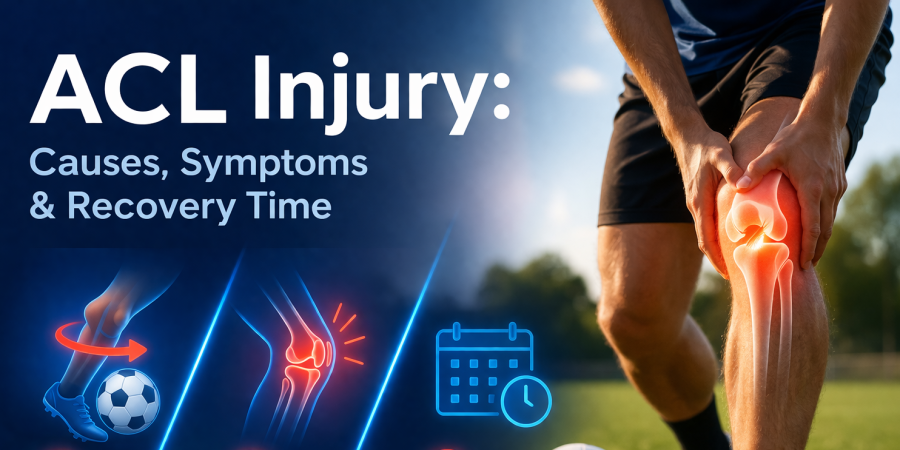
A torn ACL can turn your world upside down in a matter of minutes. Just one wrong move on the pitch could mean the end of everything you know. The pain, the inflammation, and the dread that follows can seem too much to bear. However, for thousands of people every year, there is real hope. Early diagnosis and treatment make all the difference. Whether you are a sportsman or someone who simply slipped on a staircase, understanding the injury is essential to getting the right help. Recovery is possible, and this guide will show you how.
What Is the ACL?
Structure and Function
The ACL stands for the anterior cruciate ligament — a strong band of tissue inside your knee joint that connects your thigh bone to your shin bone. This ligament keeps your knee stable during movement by controlling how much the shin bone can slide forward and how much the knee can rotate. Without a healthy ACL, therefore, the knee becomes unstable, and simple movements like walking, running, or jumping can feel unsafe.
Why It Gets Injured So Often
The ACL is one of four main ligaments in the knee. Because of its central role in controlling rotational stability, it is also among the most commonly injured ligaments in active people. Athletes who participate in sports involving sudden direction changes, jumping, or contact are especially at risk.
Common Causes of ACL Injury
Most ACL injuries happen during sports or physical activity. Notably, you do not always need contact with another person for this injury to occur.
Sudden Change in Direction
Pivoting or cutting quickly places heavy stress on the knee. If the force is too great, the ligament can tear. This is common in football, basketball, and tennis players.
Sudden Stop While Running
Slowing down abruptly from a sprint is risky because the knee absorbs a large amount of force in that moment. As a result, the ACL may not handle that pressure well and can give way.
Landing Awkwardly from a Jump
Landing with a straight or twisted knee is dangerous, since the joint absorbs shock poorly in that position. Consequently, this puts the ACL at high risk of tearing on impact.
Direct Blow to the Knee
A tackle or collision can push the knee sideways with sudden, intense force. This can stretch or tear the ACL. Contact sports, therefore, carry a higher risk for this type of injury.
Overextension of the Knee
Forcing the knee beyond its normal range causes the ligament to stretch more than it can handle. In severe cases, a full tear can result from this kind of extreme movement.
Signs and Symptoms of an ACL Injury
A Popping Sound or Feeling
Many people hear or feel a pop at the moment of injury. This is often the first sign that something is wrong — it happens right when the ligament tears.
Severe Pain in the Knee
The pain is usually sharp and immediate, and it may stop you from continuing any activity. Some people cannot put weight on the leg at all.
Rapid Swelling
The knee often swells within a few hours of injury because blood fills the joint space. Furthermore, the swelling can make the knee feel stiff and heavy.
Limited Joint Movement
Bending and straightening the knee becomes difficult due to pain and inflammation. Everyday activities like sitting down or climbing stairs can become noticeably problematic.
Instability and Giving Way
Without the ligament to support the joint, the knee may feel unstable or buckle under weight. Walking on uneven surfaces, in particular, can feel very unsafe.
Diagnostic Approaches
Physical Examination
Accurate diagnosis plays an essential role in choosing the right treatment. A physical examination is the first step, involving assessment of swelling, pain, and range of movement. Additionally, specific tests such as the Lachman test and anterior drawer test help evaluate ligament integrity.
Imaging Tests
Imaging diagnostics are critical for confirming the diagnosis. MRI is the most reliable approach for assessing soft tissue damage — it can confirm whether the tear is partial or complete. Meanwhile, X-ray testing helps determine whether any bone fractures are present alongside the ligament injury.
Seeking the Right Specialist
It is advisable to seek medical care from the Best Orthopedic Surgeon in Mumbai to diagnose your knee properly. Timely and accurate diagnosis guarantees a much more positive outcome. Therefore, contact a professional immediately if you are experiencing any of the symptoms mentioned above.
ACL Injury Management Options
Different approaches to managing a torn ACL depend on the level of injury and the patient's activity level. Not all injuries require surgery. Your healthcare provider will recommend a suitable treatment method based on your specific situation.
Non-Surgical Treatments
Partial tears can often heal without surgery when patients follow the right protocol. The RICE method — rest, ice, compression, and elevation — is the essential first step. Anti-inflammatory medication helps reduce pain and swelling. Moreover, wearing a supportive brace around the knee can significantly enhance healing during this period.
Surgical Treatments
A complete ACL tear, especially in active athletes, typically requires surgery known as ACL reconstruction. During this procedure, the torn ligament is replaced with a tendon graft. Arthroscopy is the standard approach, allowing the surgeon to operate through tiny incisions. In most cases, the patient can be discharged the same day or the following morning.
Turning to an experienced orthopedic surgeon is strongly recommended to ensure the best possible surgical outcome.
ACL Recovery Time: What to Expect
Recovery from an ACL injury takes time and patience. The timeline varies based on the type of treatment and the individual.
Non-Surgical Recovery
Recovery without surgery generally takes three to six months. The focus is on reducing pain, improving strength, and restoring mobility. Throughout this period, a structured physical therapy program is essential.
Post-Surgery Recovery Stages
Full recovery after ACL reconstruction typically takes nine to twelve months, and some athletes need up to a year before returning to sport. The process unfolds in clearly defined stages. During the first two weeks, the goal is to control swelling and start gentle movement. From weeks two to six, the focus shifts to regaining range of motion. Between months two and four, strength training begins in earnest. From months four to eight, sport-specific drills take over. Finally, the last phase involves return-to-sport testing and medical clearance.
Staying Committed to Rehabilitation
Following your rehabilitation plan is the single most important part of recovery. Skipping sessions or rushing back too soon can cause re-injury, which sets progress back significantly. The Best Orthopedic Surgeon in Mumbai will connect you with a skilled physiotherapist for guided, safe recovery.
How to Prevent ACL Injuries
Strengthen the Muscles Around the Knee
While you cannot prevent every ACL injury, you can significantly reduce the risk. Strengthening the hamstrings, quadriceps, and calf muscles gives the knee joint greater support and stability during activity.
Warm Up and Train Smart
Always warm up before any physical activity, as stretching and light movement prepare the joints and muscles for load. Learning proper landing techniques reduces stress on the knee considerably. Additionally, avoid playing through pain or fatigue, since both increase the risk of serious injury.
Conclusion
An ACL injury is serious, but it is not the end of your active life. With the right care, most people return to full activity. Early action matters the most. If you notice swelling, pain, or instability in your knee, do not wait. Consulting the Best Orthopedic Surgeon in Mumbai gives you the best chance at a complete recovery. A personalised treatment plan will be created to suit your lifestyle and goals. The road to recovery takes effort, but the results are absolutely worth it. Stay committed, follow your plan, and trust the process.
A partial ACL tear may heal with rest and physical therapy. However, a complete tear usually requires surgery, especially if you are active. Your doctor will advise the best option after examining your knee.
ACL reconstruction surgery typically takes one to two hours. It is done under anesthesia. Most patients go home the same day or the following morning.
You will not feel pain during surgery due to anesthesia. After surgery, some pain and swelling are normal. Your surgeon will prescribe medicines to keep you comfortable during recovery.
Most athletes return to sport between nine to twelve months after surgery. This depends on your progress in rehabilitation. Your doctor will clear you only when the knee is fully stable and strong.
The best orthopedic surgeon in Mumbai is one who specializes in sports injuries and knee reconstruction. Look for a surgeon with experience, good patient reviews, and advanced surgical techniques. Always consult a qualified specialist for a proper diagnosis and treatment plan. For expert consultation, visit best orthopedic surgeon in Mumbai or watch expert advice here.
Yes, most ACL injuries are non-contact injuries. They happen due to sudden stops, pivots, or awkward landings. You do not need to be hit by someone to tear your ACL.
Yes, physiotherapy is a critical part of recovery. It helps restore strength, stability, and movement in the knee. Skipping therapy can slow recovery and increase the risk of re-injury.